The human foot is a very complex structure. It can be said without exaggeration that every foot is unique and differs from person to person. These differences can be quite significant. When choosing the correct shoe size for a child, the situation is often complicated by the fact that the child may not cooperate during fitting or we cannot fully rely on their feedback.
Therefore, when selecting properly fitting shoes it is necessary to measure, compare and evaluate correctly. There are many parameters that should be taken into account. In the following guide we will help you understand how to choose the correct shoe length.
It is important to buy new shoes for children as soon as they need them. As children grow, their feet grow as well – and the younger the child is, the more pairs of shoes they will need during the year. Wearing shoes that are too short can lead to foot damage and long-term health problems.
To avoid permanent damage to children's feet, it is important to measure both the child's foot and the internal length of the shoe. Today there are many different sizing systems on the market, therefore it is not always possible to rely on the size printed on the shoe. The shoe size may not correspond to the actual foot size.
For this reason it is necessary to measure both the foot and the shoe correctly. A useful tool for this purpose is the measuring device PLUS 12, which can be used for both children and adults.
For these reasons we consider the methods above unreliable. Based on our experience, the following procedure is the most accurate way to determine the correct shoe size.
First determine the current maximum foot length. Place the child with the heel lightly touching a straight wall. At the end of the longest toe (usually the big toe) mark a vertical line on the floor. The distance between this mark and the wall is the foot length we need.
.jpg)
For all FARE shoes, the internal shoe length is listed on www.fareshoes.com. It is useful to understand how this value is determined so that it can be used correctly when selecting shoes.
.jpg)
It is important to note that we cannot rely on the length of the insole. The insole does not always reach the very front of the shoe and does not account for the rounded shape of the heel area.
It is also important to consider the shape of the forefoot and compare it with the shape of the shoe.
Once the foot length has been measured correctly, it is necessary to choose the correct allowance. The internal length of the shoe should be approximately 8–14 mm longer than the foot length.
This allowance provides space for natural foot movement while walking, for slight swelling of the foot during the day, for socks and also for the natural growth of the child's foot.
The final shape of a shoe is determined by the last used during manufacturing. Therefore, it is best to rely on the measurements provided directly by the manufacturer. According to our experience, other methods of measuring shoe length are less accurate.
Always measure the length of both feet and compare it with the internal length of the selected shoe.
The Plus 12 measuring device is also a helpful tool when choosing the correct shoe size, as it allows a quick comparison between foot size and the selected shoe.
This method cannot be combined with the measurement method described above.
The Plus 12 device is a useful tool that should not be missing in any good children's shoe store or household. Children's feet grow quickly, and during certain growth periods they may grow several shoe sizes per year.
If a child likes the design of their shoes, we cannot expect them to objectively say one day: “My shoes are too small.”
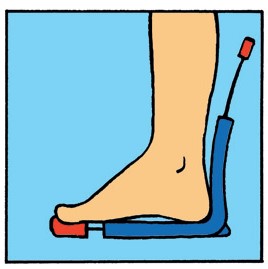
Extend the PLUS 12 measuring device and measure both feet barefoot or with thin socks. The displayed value in millimetres represents foot length plus the required 12 mm allowance.
Insert the PLUS 12 device into the shoe and extend it. The value shown in millimetres represents the internal length of the shoe, which is also listed in the product description in our e-shop.
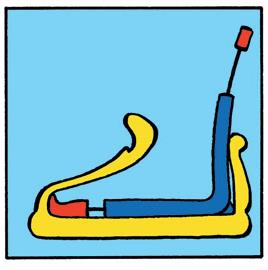
If both values are the same, the allowance is 12 mm and the shoe size is suitable.
You can order the PLUS 12 measuring device here.
Children's feet grow quickly and change in length, width and proportions. The foot of a small child grows on average 15–18 mm per year, while in older children it grows about 8–12 mm per year.
This means that children aged 2–3 years may need 2–3 shoe sizes per year, preschool children about 2 sizes and school-age children about 2–3 sizes per year.
| Age | Recommended Check |
|---|---|
| 1–3 years | Every 3 months |
| 3–6 years | Every 4 months |
| 6–10 years | Every 5 months |
If approximately 98% of children are born with healthy feet, there is no reason why this should not remain the case into adulthood.
The responsibility lies with us. Children's feet need many years to fully develop so that bones, muscles and tissues become strong yet flexible. The better we care for them in the early years, the better prepared they will be for the future.
Walking, running and jumping are natural parts of everyday life – as long as our feet function properly. Give your children the chance to keep it that way by providing plenty of movement and suitable footwear.
Be the first to know.News, promotions and benefits exclusively for FARE FAMILY Club members.
© 2026 FARE, spol. s r. o.
Designed by 



 Find a store


