


How to choose nursery slippers and school indoor shoes that really fit
Indoor shoes may stay on a child’s feet for many hours. Alois Šůstek from FARE explains how nursery slippers differ from school indoor shoes and what to check when choosing size, fit and fastening.
Alois Šůstek, FARE
Nursery and school place different demands on indoor shoes
Younger children need shoes they can put on and fasten independently. At school, indoor shoes are often worn for longer periods and used on corridors, stairs and in after-school care. In both cases they should be lightweight, breathable and secure on the foot.
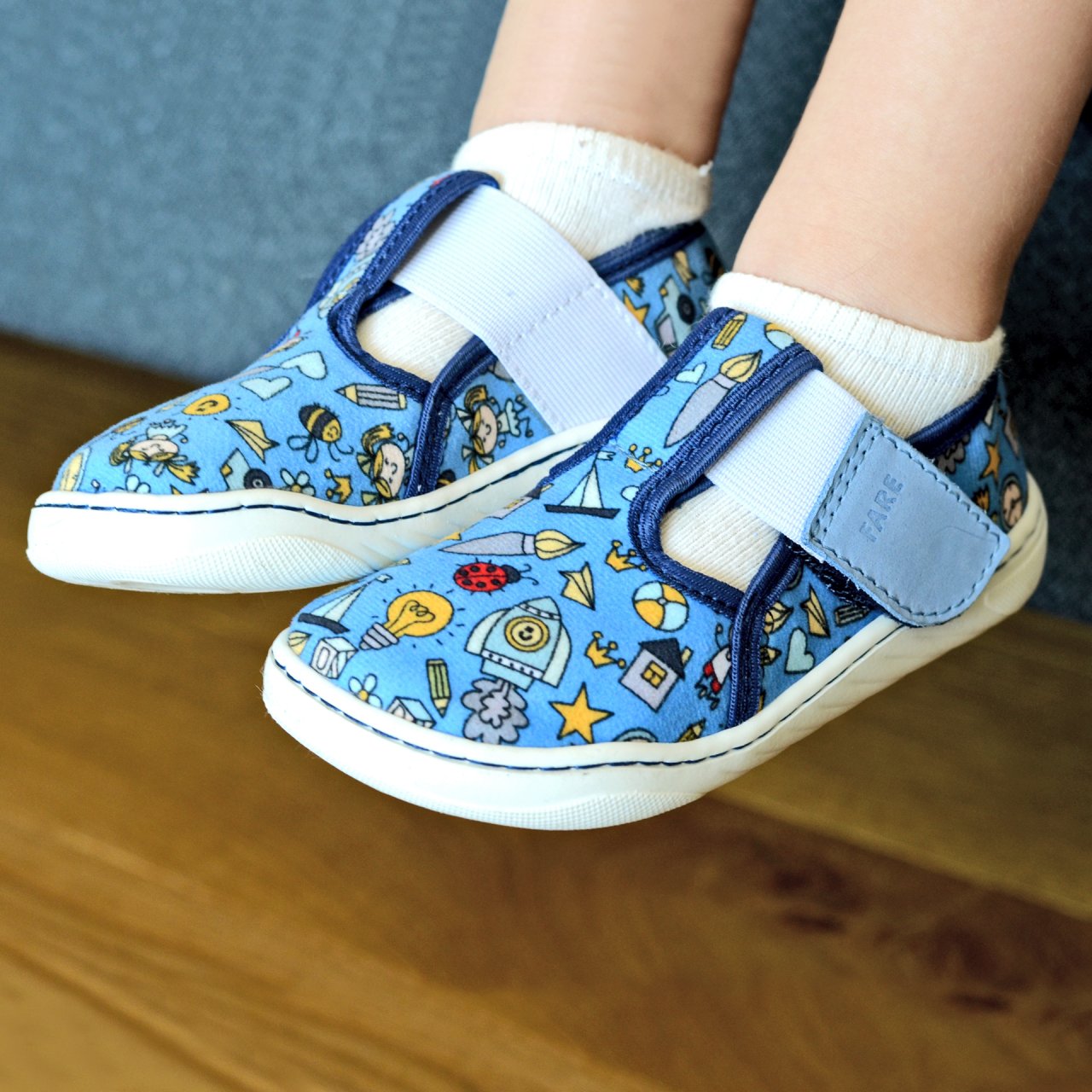
Fit comes before the picture on the upper
Measure both feet while the child is standing. Compare the larger foot with the internal length and width of the specific model. The toes need room, but the heel should not slip noticeably and the child should not hold the shoe with curled toes.
Elastic or hook-and-loop fastening?
Elastic makes changing quick and simple when it holds the foot without cutting into the instep. Hook-and-loop fastening can be adjusted more precisely and is useful when the child can close it firmly on their own.
KLASIK, MID-WIDE or FARE BARE?
FARE KLASIK follows a traditional construction. MID-WIDE offers more toe space and forms a bridge between classic and barefoot footwear. FARE BARE uses a foot-shaped toe box, zero drop and a highly flexible sole. The correct choice depends on the child’s foot, not on the label alone.
Check the size during the school year
Children’s feet can grow in sudden stages. Recheck the fit whenever shoes become difficult to put on, the gait changes or pressure marks appear.
Frequently asked questions
Can the same slippers be used at home and at school?
Yes, if they meet the school’s requirements and stay secure and comfortable during longer wear.
Are barefoot indoor shoes suitable for every child?
Only when their shape, width and internal dimensions match the foot and the child is comfortable in this construction.

 Find a store


