


First walking shoes: when does a child really need them and how do you choose?
A child does not need shoes simply because they have started standing up. First shoes become useful when an independent walker needs protection from cold, rough ground or outdoor conditions. Alois Šůstek from FARE explains how to choose by walking stage, foot shape and real use.
Alois Šůstek, FARE
Start with the walking stage, not the child’s age
For a baby who is crawling, sitting or only pulling up, soft socks or booties mainly provide warmth. On a safe floor, barefoot movement gives the feet direct contact with the ground. Outdoor shoes are needed when the child walks independently and regularly outside.
Booties, indoor shoes or first outdoor shoes?
Soft baby booties are not designed for wet paths, stones or repeated outdoor walking. Indoor shoes make sense on cold or slippery floors and in childcare settings. First outdoor walking shoes must match the surface and season while remaining light and flexible.
What should first walking shoes provide?
- enough room for the toes,
- a flexible, lightweight sole,
- a flat construction without an unnecessarily raised heel,
- secure hold at the heel and instep,
- protection appropriate for the surface and weather.
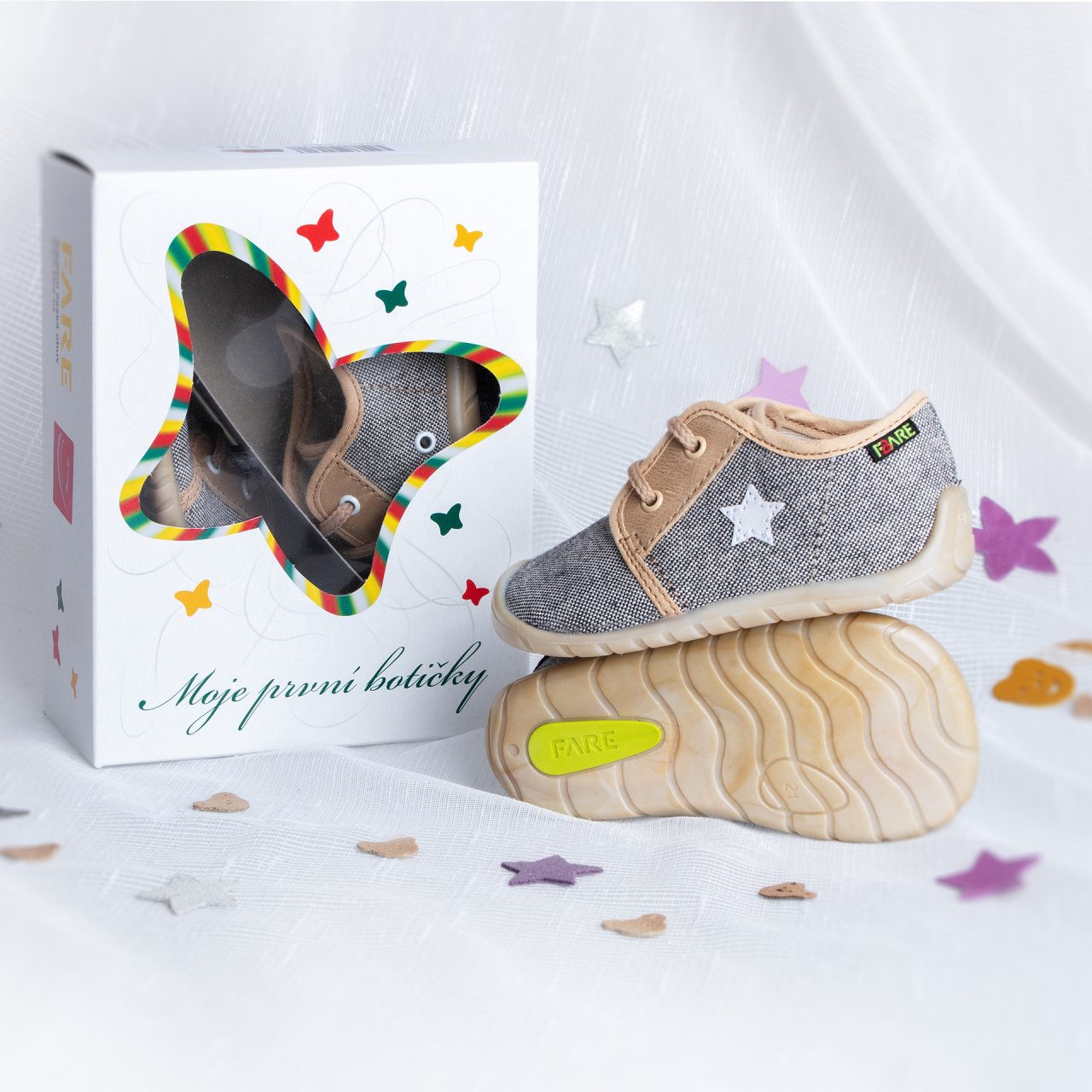
FARE FIRST models are available in EU sizes 19–23. Barefoot features are useful only when the shape and internal dimensions match the child’s foot.
How to choose the correct size
Measure both feet while the child is standing and use the larger measurement. Compare both length and width with the internal dimensions of the specific model. Growing room should not make the shoe slide or cause the child to grip with curled toes.
Questions parents often ask
Should a child wear first shoes at home?
Not on every safe surface. Shoes are useful for cold, slippery or shared environments; otherwise barefoot movement is often the simplest option.
How often should the size be checked?
Check regularly, especially when the gait changes, shoes become harder to put on or pressure marks appear.

 Find a store


